
Dental Crowns – Westminster, CO
Strong, Beautiful Restorations For Damaged Teeth
What Is a Dental Crown?
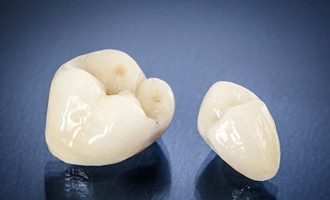
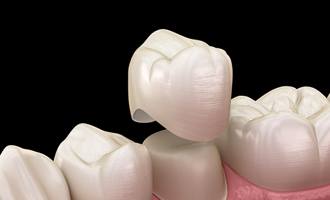
A natural tooth has two main parts: the root and the crown. A dental crown, sometimes called a “cap,” is a type of dental restoration that fits over the entire crown of a tooth to repair any damage. We may recommend dental crowns in the following situations:
- When a tooth is already chipped or weakened by multiple fillings, a dental crown will strengthen it and prevent it from breaking further.
- If you have a large cavity that can't be repaired with a filling.
- After replacing a missing tooth with a single dental implant, it's restored with a dental crown.
- A crown may be a great choice for certain types of cosmetic work.
- A root canal removes the blood supply of a tooth, which makes it weaker and prone to breaking. A crown will restore the tooth's strength.
What Are Dental Crowns Made Of?
What Should You Do If You Break or Lose a Dental Crown?
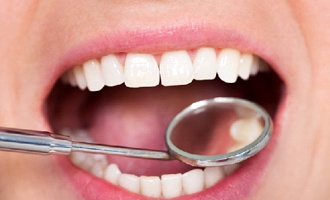
The materials used for dental crowns not only look great but are very strong and durable as well. With basic maintenance, your crown can last 15-20 years and shouldn't break under normal circumstances.
- If you unknowingly bite down hard on something like an olive pit.
- If you chew on ice or use your teeth to open packages or bottles.
- If you clench and grind and don't wear a protective nightguard.
- If you don't keep the gumline around a dental crown clean with good brushing and flossing habits, a cavity can develop underneath it. This will weaken the crown and may cause it to become loose and fall off.
- If you frequently eat sticky foods like taffy, caramel, etc.
In the event that you do chip or break a crown, give us a call right away. You can cover any sharp edges with dental wax from the store until your appointment.
If a crown comes off entirely, call us to make the first available appointment. In the meantime, rinse the crown off (taking care not to drop it) and let it dry. Then you can use dental cement from the store, or a small dab of denture adhesive or even toothpaste in a pinch, to put it back on your tooth. However, make sure not to use any other type of glue or adhesive, which can damage both your natural tooth and the crown. Finally, chew on the opposite side until your appointment with us.
How much does a Dental Crown cost?
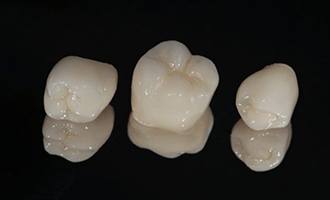
A dental crown has many different uses; it can repair a tooth that’s been damaged by cavities or physical trauma, but it might also be used to improve the appearance of your smile. But how much will the procedure cost? The answer depends on a several different variables. Here are 4 things to keep in mind when figuring out the ultimate price of your dental crown.
1. Material of Dental Crowns
A dental crown can be made of several different materials depending on your needs. Examples include:
- Gold crowns, which tend to be stronger and more durable than other crowns but also tend to stand out in your smile.
- All-porcelain crowns, which are the most natural-looking replacements for front teeth and tend to be more popular for patients worried about appearances.
- Porcelain fused to metal crowns, which combines the strength of the metal with the aesthetics of the porcelain.
In general, porcelain fused to metal crowns tend to be the least expensive while all-porcelain crowns tend to be more costly, and the price of gold crowns will usually be somewhere in between. Of course, prices vary, so you should check with your dentist first.
2. The Treatment Before You Receive Your Crown
In many cases, you might receive a crown as part of another treatment; as such, the price of the other procedure will need to be considered. Most of the time, crowns are placed after you receive root canal treatment (to protect the remaining tooth structure) or dental implants (to serve as the actual replacement tooth while the implants act as roots). Furthermore, any consultation you have regarding tooth repair is likely to have its own cost.
3. Dental Insurance
If you are getting a crown as a restorative procedure, there is a good chance that your dental insurance will help you pay for it. Most plans are willing to provide up to 50% coverage of major procedures like crown placement (although you should confirm your benefits beforehand). Of course, you also need to consider your plan’s annual maximum and deductible, as that could potentially affect the amount your pay out of pocket.
4. The Need for Replacements
A dental crown won’t last forever; sooner or later, it needs to be replaced with a new one. The lifespan of a crown will depend on how well you take care of it. This is something to consider when determining the ultimate cost of a dental crown procedure.
Remember that in many cases, getting a dental crown is necessary to protect your damaged tooth as well as your overall oral health. Keep that in mind when looking at the cost of your restoration; it will always be better to choose the option that’s best for your smile and your bank account over the long term.
Dental Crowns FAQs
Does It Hurt to Get a Dental Crown?
Getting a dental crown in Westminster is a comfortable, low-stress experience. During the procedure, we’ll numb the area around your tooth so you won’t feel pain while it’s being prepared. You may notice a little pressure or mild vibration from our tools, but it shouldn’t hurt.
Afterward, some temporary sensitivity or soreness is normal and usually fades within a few days. Over-the-counter pain relievers or saltwater rinses can help ease any discomfort. If you experience pain that doesn’t go away, just give us a call! Our team is here to make sure your crown feels as good as it looks.
Are Dental Crowns Permanent?
Dental crowns are long-lasting restorations, but they’re not considered permanent. Daily wear, eating habits, and oral hygiene routines all play a role in how long your crown will hold up. It will, however, eventually need to be replaced. Once you have a dental crown, you’ll always need one covering the tooth.
At J.B. Dental, we use durable materials and advanced techniques to help your crown last as long as possible. While
you won’t have to worry about replacing it anytime soon, regular checkups will allow us to monitor your crown
and make sure it stays in great shape for years to come.
How Long Do Dental Crowns Last?
The lifespan of your dental crown depends on the material used and how well you care for it. At our Westminster dental office, we offer crowns made from gold, porcelain, ceramic, and zirconia—each known for its strength and longevity.
On average, crowns can last 10 to 15 years, though some last even longer with excellent hygiene and routine checkups. Avoiding habits like chewing ice or opening packages with your teeth will also help extend the life of your crown.
If you grind your teeth at night, be sure to ask our team about a nightguard to protect your pearly whites. The
better you care for your smile, the longer it will stay pristine.
Are Dental Crowns Covered by Insurance?
In many cases, yes—dental crowns are partially covered by insurance, especially when they’re medically necessary. Our office is in-network with most major PPO plans, and we’re happy to check your benefits ahead of time.
Even if you don’t have insurance, we have you covered. Our in-house J.B. Dental Membership Program includes savings on crowns and other services, making care more affordable without traditional insurance. We also accept flexible payment options through CareCredit and Cherry to help split the cost over time.
One of our Westminster dentists, either Dr. Bancroft or Dr. Lim will walk you through all your options so you can get the care you need without worrying about your wallet.