
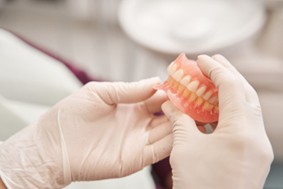
While there are many great benefits associated with traditional dentures, one that doesn’t always prove to be a selling point is the kind of bite force they provide for eating. Too often, denture wearers are unable to consume necessary nutrients – those designed to improve oral and overall health. But what is the alternative? Read on to find out how much these prosthetics can shape your diet and why switching to implant dentures might be a better solution.
Can I Eat Normally with Dentures?
When you think about the kind of bite force you have with natural teeth, their placement within the jawbone allows you to eat dense, chewier, and even harder foods with a level of ease. However, if they are replaced with custom dentures, your bite force will likely drop to nearly a quarter of what it was when your smile contained natural teeth.
The reason is that dentures only sit atop the gums and deliver no stimulation to the jawbone. Even if denture adhesive is used for an added layer of security, it is still challenging to eat nutrient-rich foods because of the potential for slippage while eating.
How Do Dentures Affect Nutrition?
If you’re no longer able to eat certain foods because of your dentures, there’s a good chance that you’re missing out on valuable nutrients your body, brain, and smile need to remain healthy.
The difficulties that come with dentures can lead to malnutrition and poor digestion simply because these foods are not chewed up properly (i.e., fresh fruits and vegetables, whole grains, etc.). Also, if you are tired of struggling with this problem, you may choose to eat only meals that consist of softer food items, many of which can contain starches, sugars, and other unhealthy ingredients.
While there are nutrient-friendly options you can choose from while wearing dentures, such as cottage cheese, eggs, pasta, rice, soft fruits, broiled fish, and more, there is another solution you may want to consider – implant dentures.
How Can Transitioning From Dentures to Dental Implants Help?
Traditional dentures may be able to create a more natural-looking appearance, but they lack durability and longevity. However, when attaching them to dental implants, they become a stable and lifelike solution – the closest thing to natural teeth.
Dental implants are placed within the jawbone and fuse over time to establish a firm foundation for your new denture. Once secured in place, you will be able to enjoy all of your favorite foods because these prosthetics are known to restore nearly 80% of your regular bite force, so your oral health isn’t the only thing to benefit. Your body, especially your heart, gut, and digestive system, will improve as well.
It’s important to talk to your dentist about switching from dentures to dental implants if you are interested. Not only will this transition help you to enjoy a longer-lasting smile, but you’ll also appreciate being able to eat a meal with added comfort and ease.
About the Author
Dr. Joanne Bancroft has been practicing dentistry since 2003. Earning her dental degree from the State University of Buffalo School of Dental Medicine in 2002, she attended a General Practice Residency at the University of Colorado School of Dental Medicine. Although she provides dentures to those who prefer a non-surgical tooth replacement solution, she can also deliver dental implants as a proven effective alternative. If you want to eat normally and enjoy life with a lifelike, durable smile, contact us at (720) 458-6561 to learn more!