
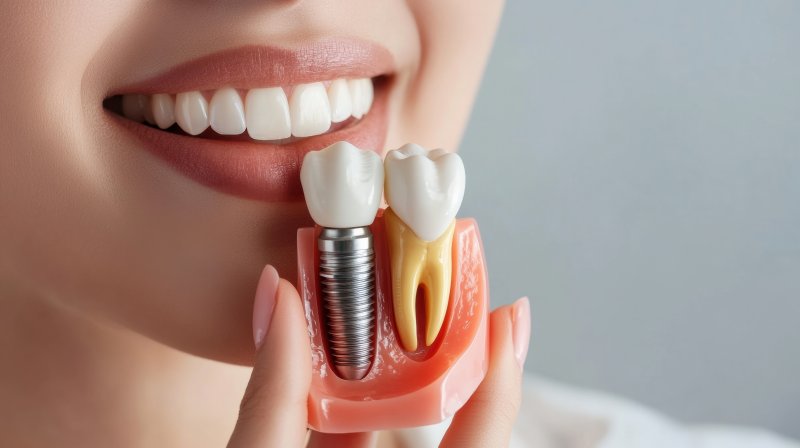
Dental implants remain a versatile form of tooth replacement, capable of replacing one tooth, multiple teeth, or an entire arch. Knowing these prosthetics can rebuild your smile from the roots up can give you greater peace of mind, but do you know how many titanium posts you will need to ensure a fully supported grin? Keep reading to learn why a meeting with your dentist is essential to determine the appropriate number for better oral health.
Dental Implants: What Are the Different Types?
There are different types of dental implants that you and your dentist will discuss during your initial consultation. Each is crafted according to your needs, so the recommended implant prosthetic will depend on how many missing teeth you have. This includes:
Implant Crown
A single implant crown can replace a single missing tooth in the upper or lower arch. Its titanium post, which mimics a natural root, will fuse with the bone once it is placed in the socket. It will then be topped with a metal abutment and customized dental crown, effectively filling in the gap to restore your oral health and appearance.
Implant Bridge
An implant bridge is designed to replace multiple consecutive missing teeth. Using two implant posts, your dentist will secure them into the bone before attaching a custom-made dental bridge. This prosthetic differs from a traditional fixed bridge because it doesn’t require altering healthy abutment teeth.
Implant Denture
When an entire row of missing teeth needs to be replaced, your dentist can use 4-6 titanium posts to support a fully fabricated denture. Placed strategically along the gumline, the posts will fuse through osseointegration to support a new set of artificial teeth. Once in position, you will begin eating and speaking normally again, and you’ll appreciate your new confidence.
Why is a Consultation Required?
Meeting with your dentist for a scheduled consultation is essential for many reasons:
- They can examine your oral health to determine if you need additional treatment, such as gum disease therapy, bone grafting, etc.
- They will decide how many dental implants you need and which type of restoration you can expect to receive
- They will provide a cost estimate for your review
Once you know what kind of dental implants you will need, you can prepare for the upcoming surgery and a one-of-a-kind smile in the end. Your dentist knows what is best for your smile, so you can trust they will set you up for success during this initial appointment.
About the Author
As a trusted dentist in the area, Dr. Joanne Bancroft has been practicing for more than two decades. She earned her dental degree from the State University of Buffalo School of Dental Medicine in 2002, and she completed a General Practice Residency at the University of Colorado School of Dental Medicine. Providing in-house dental implant placement and restoration, she and her team rebuild smiles more conveniently and efficiently. If you want to discuss your eligibility for these prosthetics, contact us at (720) 458-6561 so we can provide the help you need!