
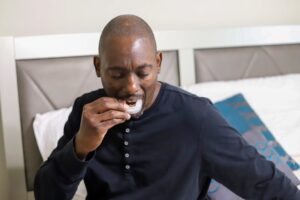
Sleep apnea affects millions of Americans each year, causing daytime fatigue, drowsy driving, and irritability, among a host of other health-related conditions. Failing to seek treatment can lead to serious problems that affect more than your ability to breathe easily and get ample rest each night. However, with a dentist’s help, you can improve your symptoms and start achieving better sleep with a custom oral appliance or CPAP device. But which one is better for your needs? Keep reading to find out.
CPAP vs. Oral Appliance: Pros and Cons
As two highly regarded treatment options for sleep apnea, it can be hard to know which one you should use to improve your sleep quality. While you should listen to your dentist’s recommendation, it’s also important that you weigh the pros and cons associated with each. They include:
Pros
- CPAP therapy remains the most effective treatment for obstructive sleep apnea (OSA)
- Oral appliances are portable and easy to use/travel with
- Oral appliances are customized to fit comfortably inside your mouth and emit no noise
- CPAP therapy and oral appliances are commonly covered by a person’s health insurance, including Medicare
- Oral appliances are great for individuals who are CPAP intolerant
Cons
- CPAP devices are loud and bulky, making it difficult for people to maneuver
- CPAP devices can be uncomfortable for many patients
- Oral appliances can cause jaw discomfort, excessive saliva, and possible bite misalignment (this is rare)
- CPAP devices can cause dry mouth because of the air pressure
Is an Oral Appliance or CPAP a Better Option for You?
The only way to know which appliance is right for you is to talk to your dentist. Depending on the severity of your sleep apnea, you may do well with an oral appliance. Generally, CPAP machines are recommended for severe cases of OSA; however, an oral device may be a better option, especially if you cannot use a CPAP successfully.
When meeting with your dentist to discuss your options, make sure to include your preferences so they can be taken into consideration when building a treatment plan. If an oral appliance proves more effective and you prefer its portability, comfort, and ease of use, you will need to maintain regular follow-up appointments to ensure you are experiencing improvement over time.
Don’t assume a CPAP device is the only way to treat your sleep apnea. With a customized oral appliance, you can start breathing easier and get much-needed rest sooner than you think.
About the Author
Dr. Joanne Bancroft remains a highly qualified, esteemed dentist who provides sleep apnea treatment in Westminster to patients in need. With advanced training and experience, she can help individuals breathe freely and avoid unexpected airway obstruction throughout the night. If you believe you are suffering from sleep apnea and want to discuss your treatment options, contact us at (720) 458-6561 to schedule an appointment!